


An Introduction to Heat Transfer
What is Heat Transfer?
Heat transfer is a fundamental concept in physics and engineering that involves the movement of thermal energy from one place to another. This process occurs due to a temperature difference, where heat moves from a region of higher temperature to a region of lower temperature until thermal equilibrium is reached. Heat transfer can be seen in various applications, from everyday activities like cooking to industrial processes and the design of thermal systems.
The Difference Between Heat Transfer and Temperature
While heat transfer and temperature are related concepts, they are distinct. Temperature is a measure of the thermal energy within a substance, indicating how hot or cold it is. It is a scalar quantity and can be measured in degrees Celsius (°C), Fahrenheit (°F), or Kelvin (K). On the other hand, heat transfer refers to the process of thermal energy moving from one body or substance to another due to a temperature gradient. Overall, temperature is a measure of energy, while heat transfer is the process through which thermal energy moves.
How is Heat Transferred?
Heat can be transferred in three primary ways: conduction, convection, and radiation. Each method involves different mechanisms and occurs under different circumstances. Understanding these methods is crucial for analyzing and optimizing thermal systems in various fields.
Types of Heat Transfer
Conduction, convection, and radiation.
Conduction
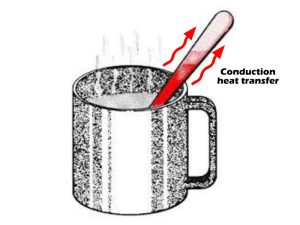
Explanation: Conduction is the transfer of heat through a solid material as a result of direct contact between particles. When a part of a solid object is heated, its particles vibrate more vigorously, transferring energy to adjacent particles. This process continues until the entire object reaches thermal equilibrium.
Example: A common example of conduction heat transfer is when a metal spoon is placed in a hot cup of tea. The heat from the tea is conducted through the spoon, making the handle warm over time.
Convection
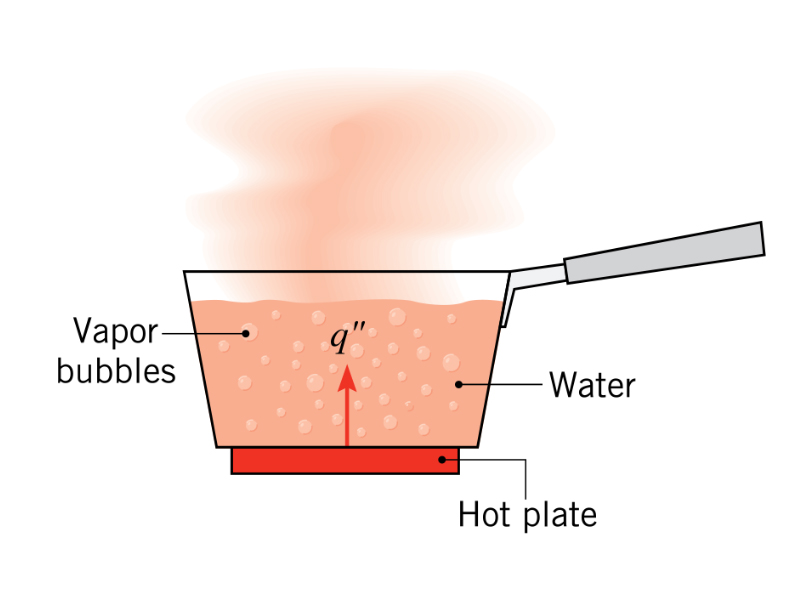
Explanation: Convection involves the transfer of heat through a fluid (liquid or gas) caused by the fluid’s movement. As fluid is heated, it becomes less dense and rises, while cooler, denser fluid sinks. This creates a circulation pattern that facilitates the transfer of heat.
Example: Boiling water in a pot demonstrates convection heat transfer. The water at the bottom of the pot heats up, becomes less dense, and rises to the surface. Simultaneously, cooler water descends to the bottom, creating a convective loop that evenly distributes heat.
Radiation
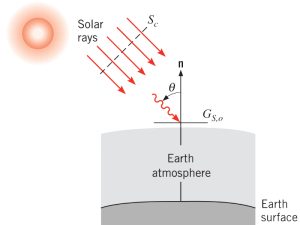
Explanation: Radiation is the transfer of heat through electromagnetic waves, such as infrared radiation. Unlike conduction and convection, radiation does not require a medium to travel through, meaning heat can be transferred through a vacuum.
Example: The heat from the sun reaching the Earth is an example of radiation heat transfer. Despite the vacuum of space, thermal energy from the sun is transmitted through electromagnetic waves, warming the planet.
The Importance of Analysis of Heat Transfer
Analyzing heat transfer is vital for several reasons. In engineering, it helps in designing efficient thermal management systems for electronics, engines, and buildings. Understanding heat transfer processes can improve energy efficiency, reduce costs, and enhance safety. For instance, effective heat dissipation mechanisms in electronic devices prevent overheating, thereby extending their lifespan and reliability. In environmental science, studying heat transfer is crucial for understanding climate dynamics and developing sustainable energy solutions.
CFD Tools for Analyzing Heat Transfer
Computational Fluid Dynamics (CFD) tools are essential for analyzing heat transfer, especially in complex systems where analytical solutions are impractical. CFD uses numerical methods and algorithms to simulate fluid flow and heat transfer processes. These tools allow engineers and scientists to visualize temperature distributions, identify hotspots, and optimize designs for better thermal performance. Common CFD software includes Ansys Fluent, COMSOL Multiphysics, and OpenFOAM. By using CFD tools, engineers can predict how changes in design or operating conditions will affect thermal behavior, leading to more efficient and effective solutions.
Conclusion
Understanding heat transfer and its mechanisms is crucial across various fields and applications. By distinguishing between temperature and heat transfer, exploring the methods of heat transfer, and utilizing tools like CFD for analysis, we can design better systems, improve energy efficiency, and enhance our understanding of thermal processes in both natural and engineered environments.
References
[1] T.L. Bergman, A.S. Lavine, F.P. Incropera, D.P. DeWitt, Fundamentals of Heat and Mass Transfer, 7th Ed., John Wiley & Sons, Hoboken, 2011.

No comment